













 Help
 Get the free app
#MyCurtsyStyle
Winter Isn’t a Wedding Dress Code
Formal invitations, chilly forecasts: velvet gowns, substantial satin midis, sleeved maxis, dressy wraps, and closed-toe heels check both boxes.
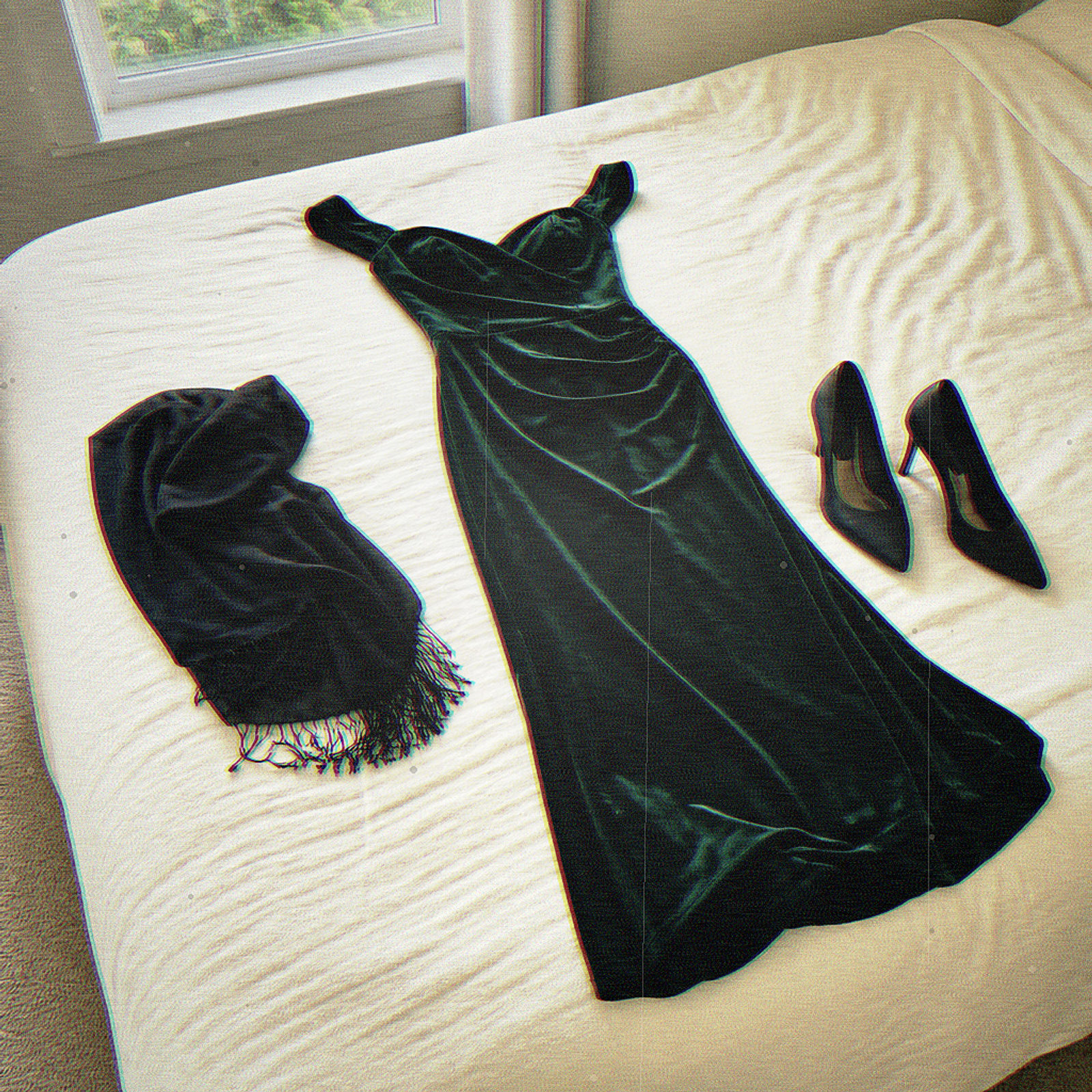
Even the dress-code guides disagree about black tie: Emily Post’s general advice includes dressy cocktail dresses, while Vogue’s wedding-guest guide says dresses should be floor-length. If you’re second-guessing a midi, you haven’t missed an obvious rule. For a December or January black-tie wedding, we’d start with a gown—then plan the warm layers.
Black tie? Start with a gown
Try a simple wine velvet column or a fluid navy gown. Look for a hem that just grazes the floor or the tops of your shoes.
You don’t need sequins, an elaborate neckline, and statement jewelry to make it feel special. Rich velvet can do plenty on its own. Keep the accessories simple if that feels more like you.
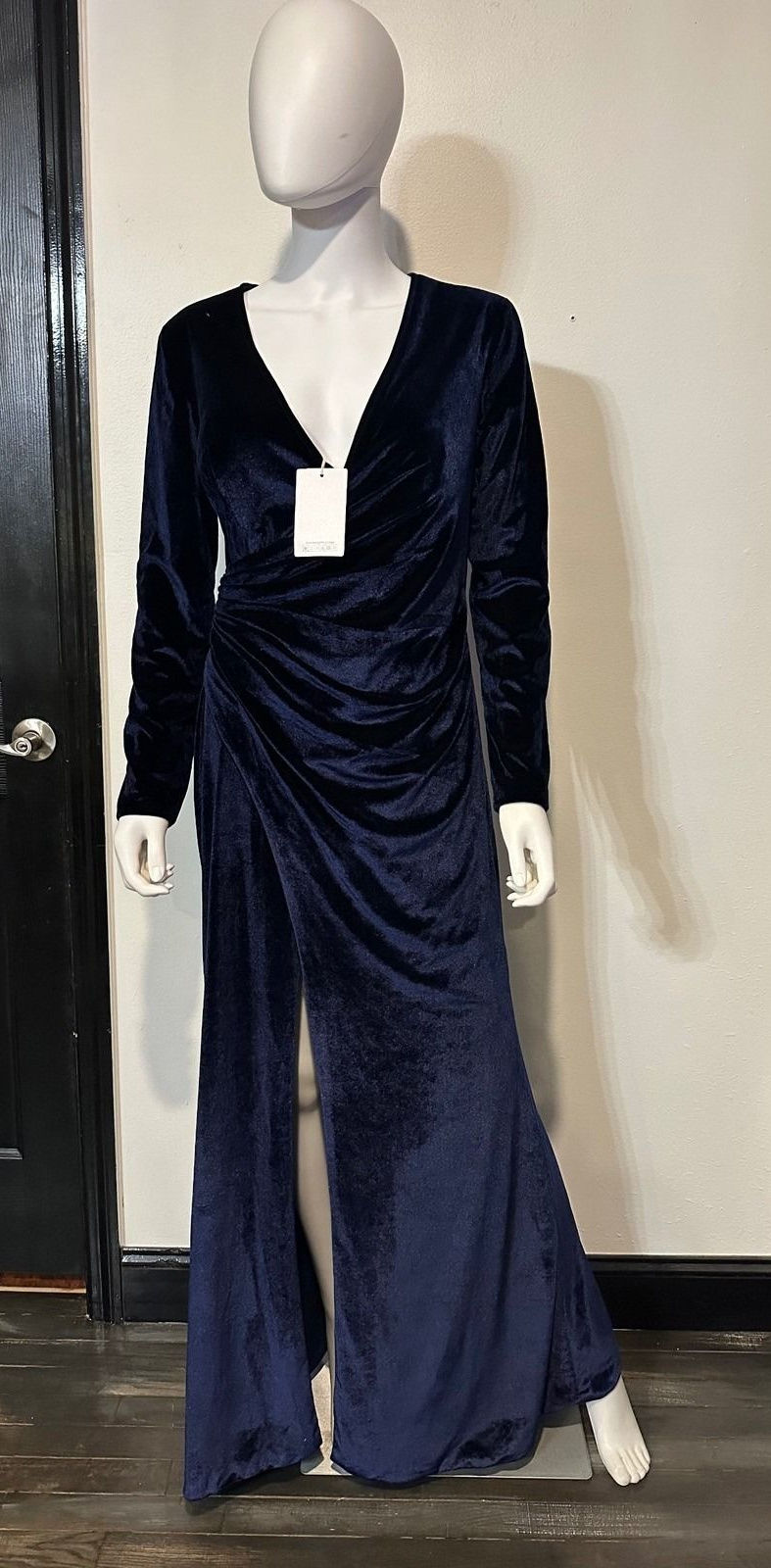
A “festive” dress code usually means cocktail attire with a seasonal touch, according to Emily Post. A short velvet dress could be a great fit there, but sharing a fabric with a formal gown doesn’t make the two interchangeable.
That’s why “winter wedding” isn’t quite enough information to choose an outfit. Velvet brings the seasonal mood. The invitation tells you how dressed up to go.
More options for formal and black-tie optional
For black-tie optional, a dressy midi or dressy separates can work. A gown is still welcome, too.
A formal invitation also leaves room for a sleek jumpsuit or an elegant cocktail dress alongside floor-length options.
For a midi, try heavier satin with a draped bodice for a dressier feel. For a formal wedding, a full-length velvet jumpsuit with a fitted bodice is another option.
Prefer separates? Try brocade trousers with a satin blouse. A velvet dinner jacket with satin lapels is another way to make the outfit feel dressed up.
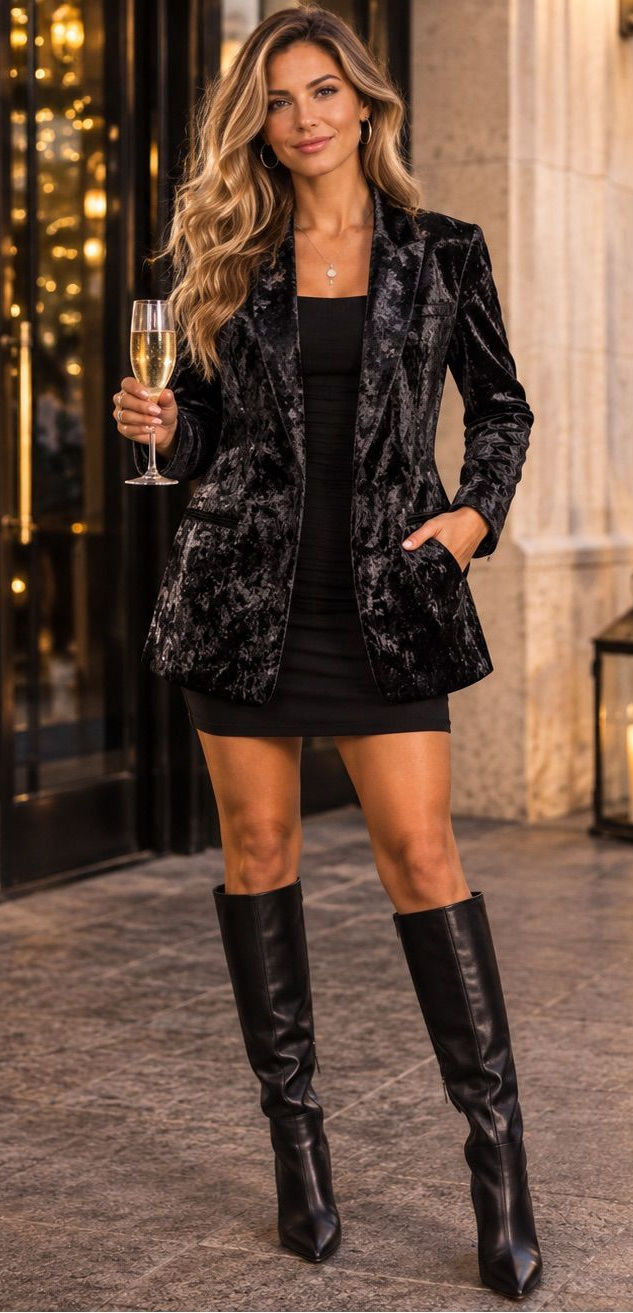
A women’s tuxedo is hardly a new idea. Yves Saint Laurent introduced his version in 1966. Only one sold to his couture customers at first, but younger shoppers embraced the ready-to-wear version.
A tuxedo is already formalwear—you’re not trying to persuade your office outfit to attend a wedding. Think satin lapels, rich texture, and trousers cut for an evening out rather than a workday.
If you’re considering a midi, jumpsuit, or separates for a strict black-tie wedding, check the couple’s dress-code notes or ask whether your choice would work.
Plan your layers, too
A sleeveless gown can still work for winter. Just plan what you’ll wear over it.
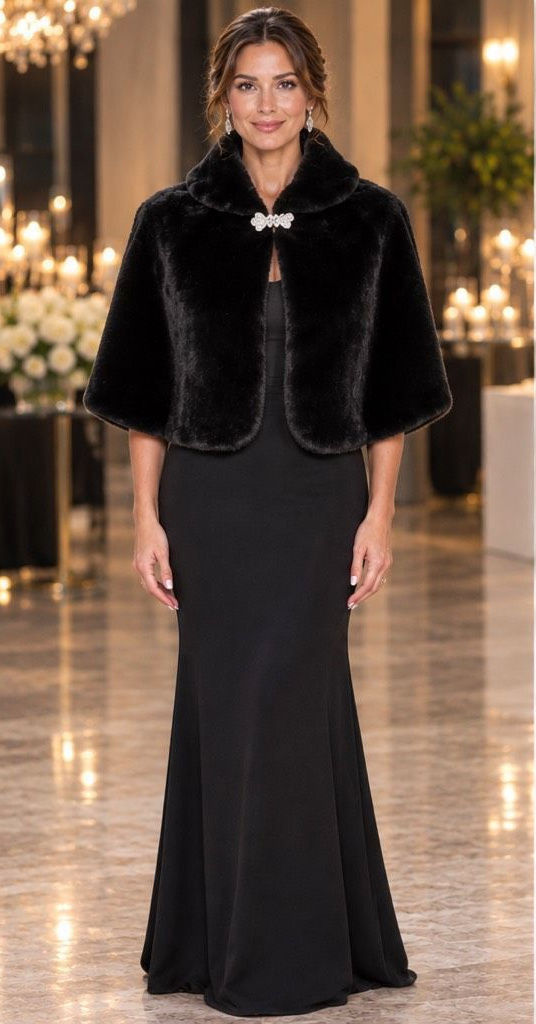
Try a wide velvet stole, a plush faux-fur capelet, or an evening jacket you’d be happy to keep on at the reception. You can choose a layer you love as much as the dress, rather than something you’re waiting to take off.
If you’d rather skip a separate wrap indoors, try a lined, long-sleeve dark-floral crepe maxi with a flowing skirt. Picture an evening dress with movement, not a casual knit maxi that happens to have long sleeves.
Check the lining, not just the fabric name. Jenny Yoo’s Melanie velvet dress, for example, has a lined bodice but an unlined bias-cut skirt. A plush-looking fabric doesn’t tell you how the whole dress is constructed.
“Satin” tells you how a fabric is woven, not what it’s made from. It can be silk, polyester, or nylon. Long stretches of thread across its surface give it that shine, but they can also snag.
When you’re shopping secondhand, ask about the lining and fabric weight. Check close-up photos for pulls or snags. For a floor-length dress, ask for the current length, too, especially if it’s been altered.
And don’t ask a decorative layer to do a winter coat’s job. A scarf neckline or light shoulder wrap can finish the outfit beautifully. You may still need a coat outside.
For shoes, try closed-toe satin pumps or crystal-accented evening flats. Pick the heel height you like—including none. Satin or crystal details keep either option feeling dressy.
Explore Curtsy’s Winter Wedding Guests collection for velvet gowns, dressy separates, and layers to go with them.