







 Help
 Get the free app
#MyCurtsyStyle
Fur and Faux-Fur Jackets Aren’t Just ’70s Throwbacks
Dinner turns into dancing in shaggy crops and plush-trimmed layers over party minis or fitted tops.
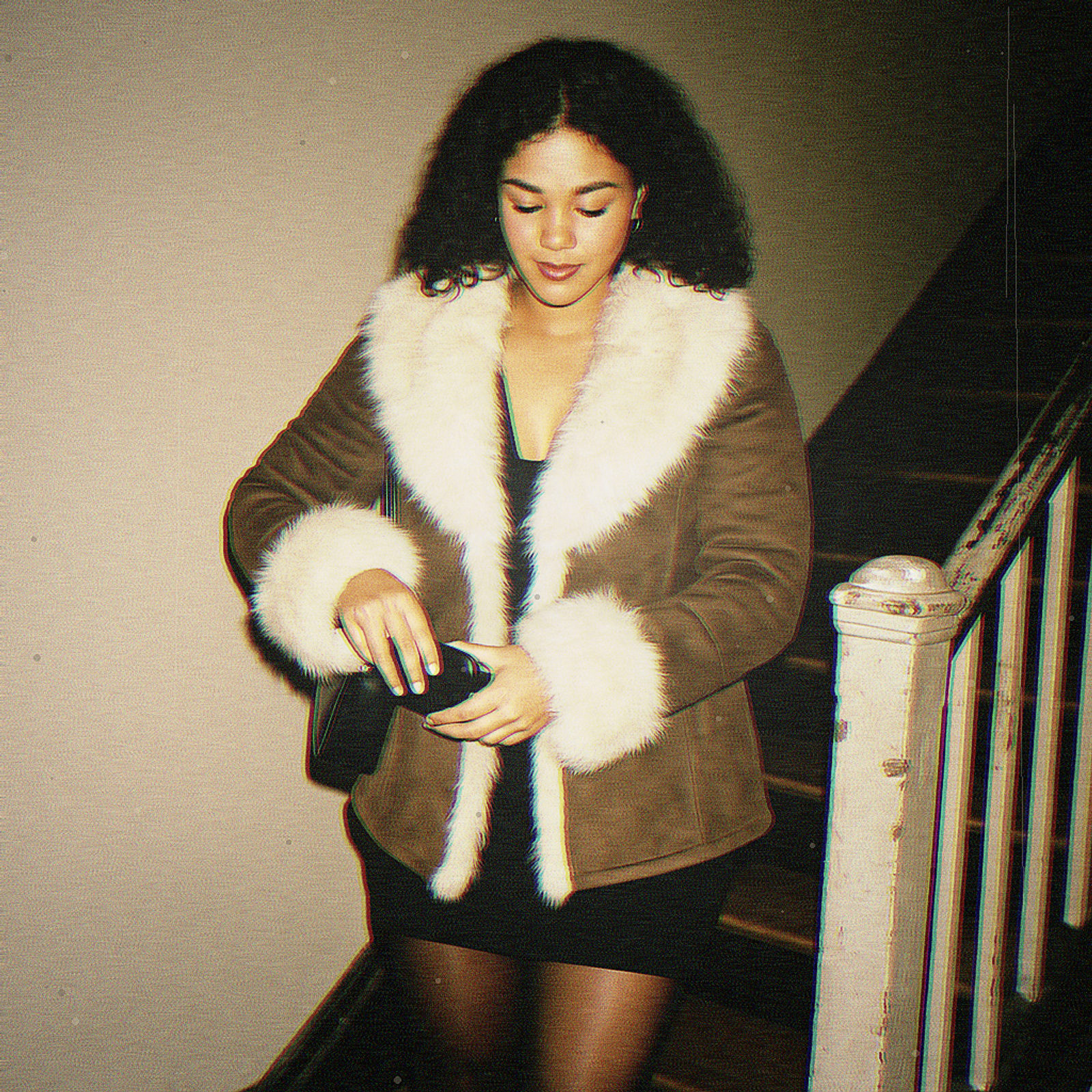
Penny Lane’s coat in Almost Famous was inspired by a 1920s opera coat, and its shaggy collar came from an Urban Outfitters rug. With going-out fur and faux-fur jackets, you can borrow the detail you love without copying a whole decade.
Fall 2026’s coats make room for both all-over faux fur and dramatic plush trims. A short bolero and a shaggy rock coat give you two very different ways to wear the look.
The short evening jacket
A 1930 mink jacket by Madeleine Vionnet measures just 19½ inches down the center front. It’s now in LACMA’s collection. Short, but not exactly subtle.
Mainbocher trimmed a cream satin evening jacket with mink in fall 1953. The fur wrapped around the shoulders and traced a bolero-shaped outline down the front. A box-pleated peplum flared out at the waist.
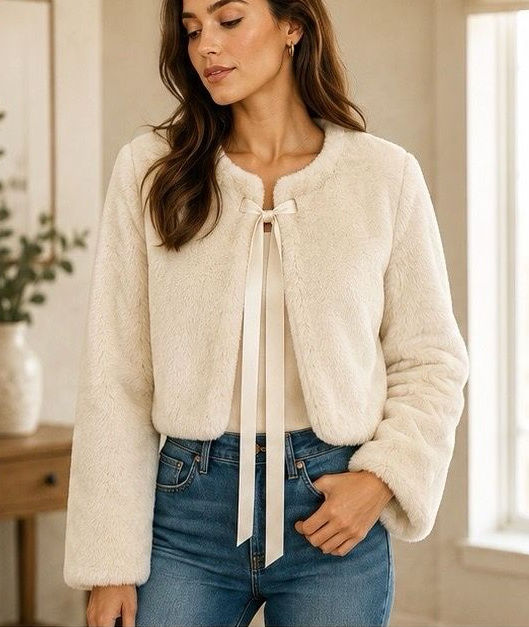
The fur acts like a frame rather than covering the whole garment. That’s part of the appeal of a short evening jacket: it adds something to the outfit without hiding everything underneath.
For a similar dressed-up feel, try a cream faux-fur bolero or a short jacket with a big plush collar. You can still show off the dress underneath. And you don’t need a formal occasion—a cropped plush jacket works over a party mini, too.
The bigger, bolder jacket
Yves Saint Laurent’s spring/summer 1971 “Scandal” collection included a bright green fox-fur jacket. It was short, bulky, and hard to miss.
The clothes recalled styles worn in Paris during the Nazi occupation in the 1940s. Critics reacted harshly. Saint Laurent’s inspiration included Paloma Picasso, who dressed in flea-market finds.
The ’70s version was already a throwback. Its exaggerated shape also offers something different from a neat evening layer: the jacket doesn’t just finish the outfit. It becomes the first thing you notice.
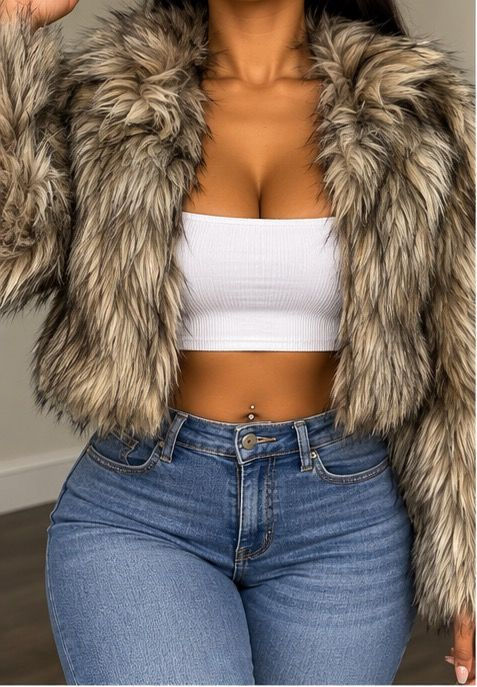
You can borrow the volume without wearing bright green or going head to toe in the ’70s. A chocolate shaggy crop works with a plain fitted top and jeans. Here, texture is doing the decorating.
Penny Lane’s shaggy collar
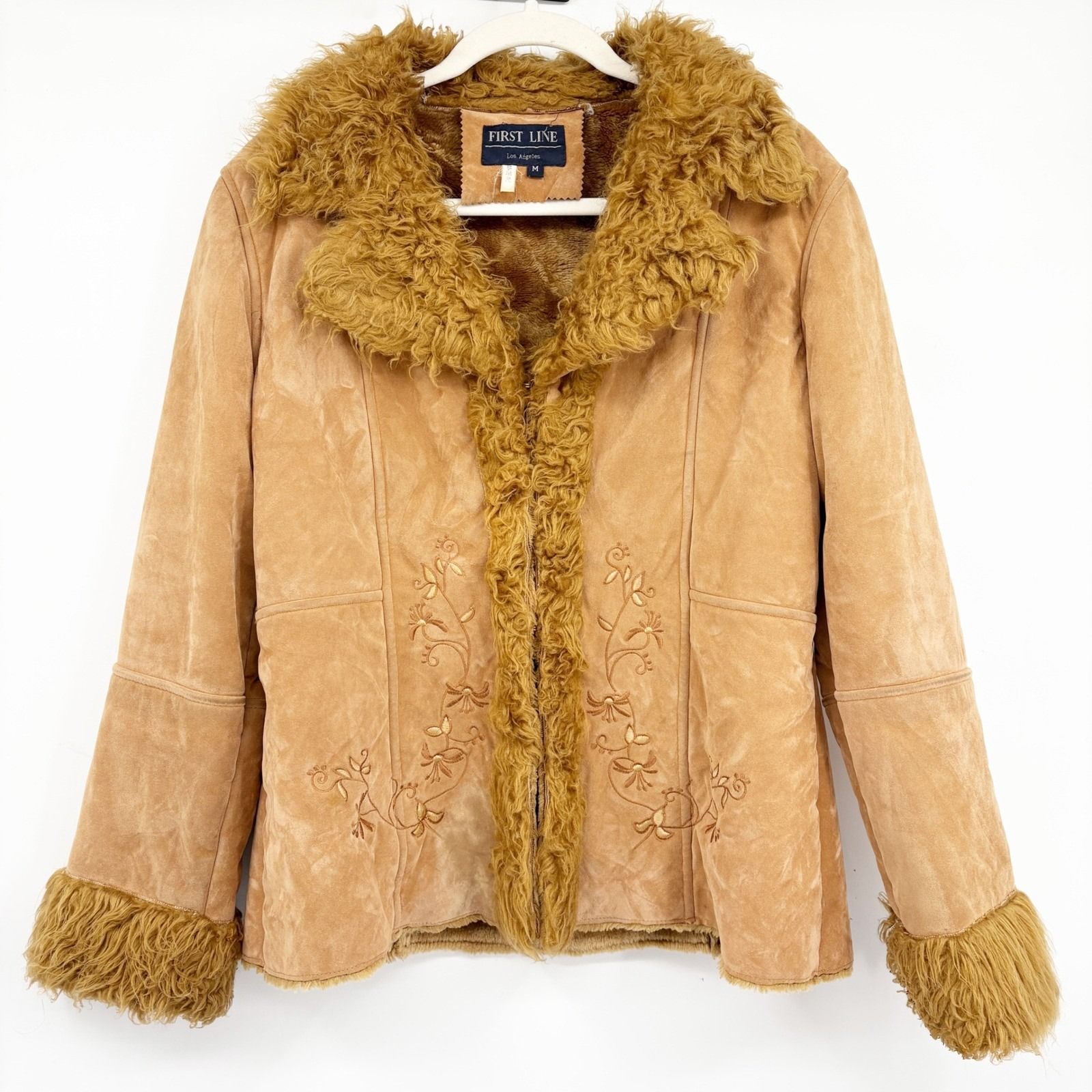
Almost Famous came out in 2000 but takes place in 1973. Costume designer Betsy Heimann gave Kate Hudson’s Penny Lane a coat with a wide collar and a loose, swinging shape.
Heimann also worked with cinematographer John Toll on the collar’s color so it would bounce light toward Hudson’s face. That oversized collar had a very specific job beyond looking cozy.
A big collar frames your face and changes the jacket’s shape. Thick plush cuffs or a wide border can make a fitted jacket stand out, too. You don’t need fur all over for the trim to be the first thing you notice.
That leaves plenty of room to choose your own version. A suede-look jacket with shaggy edging leans toward Penny Lane. A fitted black jacket with plush cuffs can feel more like eveningwear. Neither needs a full movie-inspired outfit underneath.
Borrow the shape, check the label
A vintage-looking shape doesn’t tell you how old a jacket is—or whether the fur is real or faux. Genuine fur comes from animal pelts; faux fur imitates the look.
Ask for clear photos of the material labels. Check what’s listed for both the jacket and its trim, rather than assuming one description covers everything. Labels are useful information, not a guarantee that a listing is accurate. If the material isn’t clear, ask rather than guessing from appearance.
Among Curtsy’s fur and faux-fur jackets, start with the material you want. Then look for a short bolero, a shaggy jacket, or a coat with a big plush collar.
The jacket can be the throwback. The rest of your outfit doesn’t have to be.